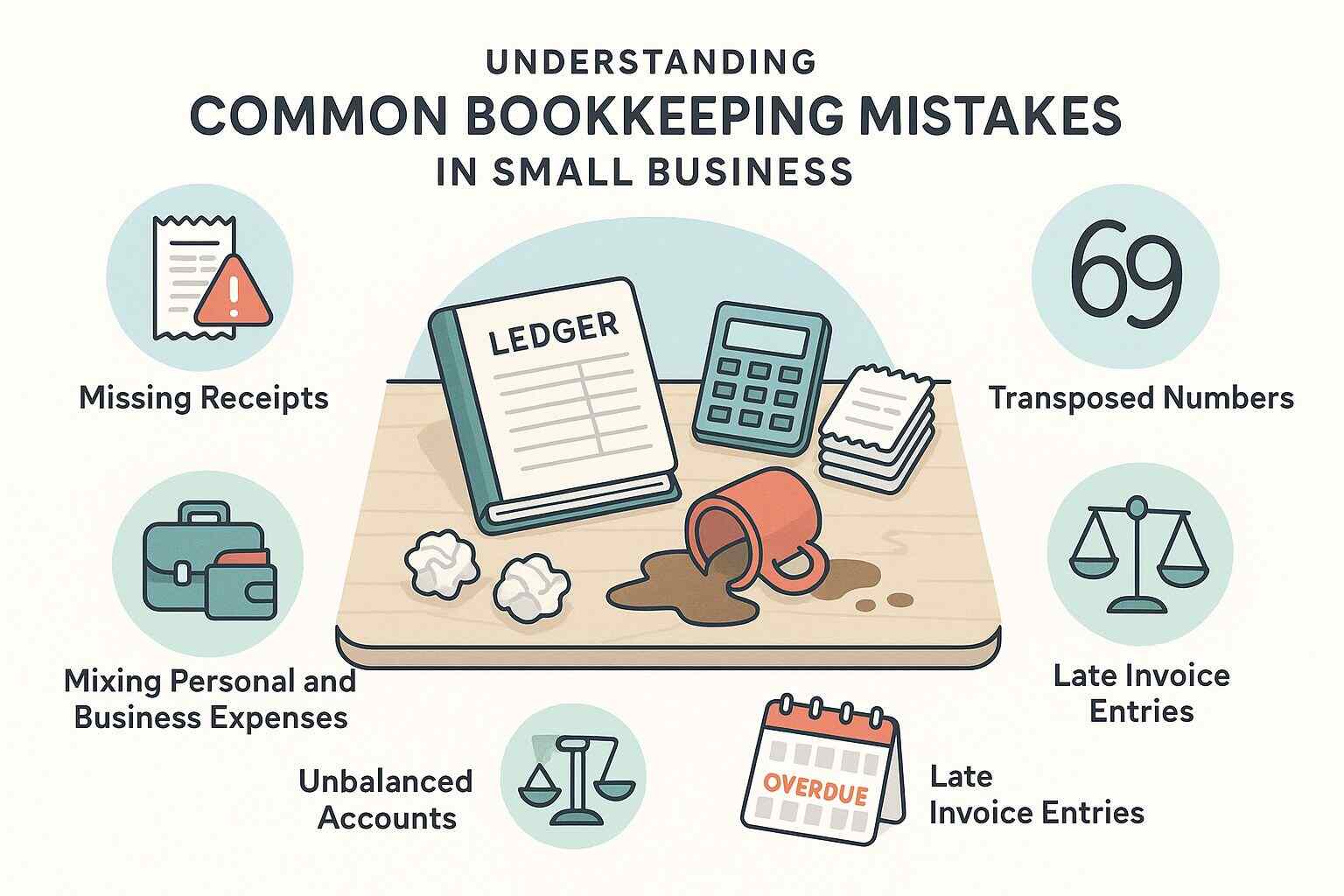
Accurate bookkeeping is one of the strongest foundations for running a successful small business. When financial records are handled properly, you gain clear insight into how your company is performing, identify savings opportunities, and remain confident that your accounts meet HMRC standards. Yet many business owners, understandably focused on serving customers and managing operations, fall into avoidable traps.
From mixing personal and business spending to overlooking regular reviews, these errors can lead to poor cash flow, higher costs, and unnecessary stress. The good news? With the right habits and professional guidance, you can sidestep these issues and keep your business financially healthy.
This guide looks at some of the most common bookkeeping mistakes by small businesses, why they matter, and how to prevent them with simple, practical steps.
Overlooking Regular Reviews and Professional Support
Many small business owners put bookkeeping checks on the back burner, especially when day-to-day tasks feel overwhelming. But delaying financial reviews makes it easy for mistakes to accumulate, whether it’s unrecorded transactions, duplicate entries, or invoices filed incorrectly. These discrepancies often only come to light at year-end, when reconciling accounts becomes more complicated and potentially more costly.
Regular reviews allow you to:
- Spot and correct errors before they escalate.
- Ensure that every sale, purchase, and expense is recorded correctly.
- Stay confident that your accounts are ready for tax submissions.
Why professional advice helps
Even with the best intentions, managing accounts without support can be stressful. Partnering with experienced accountants adds a safeguard: they not only review your records with expert eyes but also provide tailored advice to improve systems. At Royston Parkin, we regularly see how timely reviews prevent financial penalties and reveal opportunities for growth.
Takeaway action: Set aside time each month to check your books, and consider professional oversight at least quarterly. This creates peace of mind and helps you plan ahead with reliable information.
Poor Cash Flow Management
Cash flow is the lifeblood of a business. Even profitable companies can face problems if they don’t have enough money available at the right time. Losing track of incoming and outgoing funds can quickly lead to difficulties paying staff, suppliers, or tax bills.
Common cash flow mistakes include:
- Failing to reconcile bank transactions regularly.
- Overlooking late customer payments.
- Misjudging seasonal patterns or unexpected expenses.
Poorly managed cash flow means missed opportunities, overdraft charges, and strained relationships. Without accurate records, forecasting becomes unreliable, leaving you unprepared for challenges or unable to seize growth opportunities.
Practical solutions:
- Monitor weekly cash positions.
- Use reliable software or digital tools to update records in real time.
- Work with accountants who can help build sustainable cash flow strategies suited to your business model.
Takeaway action: Review your cash flow weekly. For tailored support, consider working with Royston Parkin’s advisers, who provide hands-on guidance for long-term stability.
Mixing Personal and Business Expenses
One of the most common bookkeeping errors small businesses face is combining personal and business spending. It might seem convenient to use the same card or account, but it creates confusion when you need to identify allowable expenses for tax purposes. This can result in misreporting income, missing deductions, or worse, raising red flags with HMRC.
Best practices to avoid this mistake:
- Open a dedicated business bank account.
- Keep a separate card for all company-related spending.
- Record every petty cash transaction, attaching receipts for transparency.
Creating a petty cash logbook and reconciling it regularly prevents small, unrecorded expenses from adding up into larger bookkeeping errors. With systems in place, you gain clearer insight into spending patterns and make informed financial decisions.
Takeaway action: Set up boundaries between personal and business finances immediately. It’s one of the simplest steps to protect your records and reduce stress at year-end.
Neglecting Tax Deadlines and Compliance
Missed VAT submissions or late tax returns can cost businesses not only in penalties but also in lost trust with HMRC. These issues often stem from disorganised records or delays in preparing accounts.
Common tax-related mistakes:
- Misreporting figures due to inaccurate bookkeeping.
- Missing VAT deadlines.
- Failing to keep proper supporting documents for expenses.
Keeping accurate financial statements is essential, but so too is ensuring deadlines are met. Rushed filings increase the risk of mistakes, and once errors are submitted, corrections can be time-consuming.
Practical solutions:
- Maintain digital records that are updated regularly.
- Use reminders for all statutory deadlines.
- Seek professional help to prepare and submit tax returns, ensuring accuracy and compliance.
Takeaway action: Don’t leave tax preparation until the last minute. Building a process for ongoing compliance saves time, avoids penalties, and ensures stress-free submissions.
Underestimating the Value of Professional Guidance
Many business owners assume they can save money by handling bookkeeping themselves. While this may work initially, as a business grows, financial management becomes increasingly complex. DIY bookkeeping often leads to hidden errors, missed opportunities, and inefficient processes.
Professional accountants do more than check numbers. They:
- Help establish systems for tracking expenses and income.
- Provide insights into financial planning.
- Ensure records are transparent and compliant with statutory obligations.
- Offer practical advice tailored to your industry and business size.
Takeaway action: View professional support not as a cost but as an investment. At Royston Parkin, our approachable team offers jargon-free advice, helping you refine bookkeeping practices and build confidence in your financial records.
Keeping Your Small Business Financially Strong
Avoiding common bookkeeping mistakes by small businesses is about building reliable habits and knowing when to seek support. From separating expenses to staying on top of cash flow, each step makes your accounts more accurate and your business more resilient.
If you’d like practical support tailored to your business, Royston Parkin’s chartered accountants are here to help. We can review your current systems, provide digital tools, and ensure your records meet HMRC standards. Get in touch today. With the right support, you can save time, reduce stress, and focus on running your business while we take care of the numbers.