Introduction
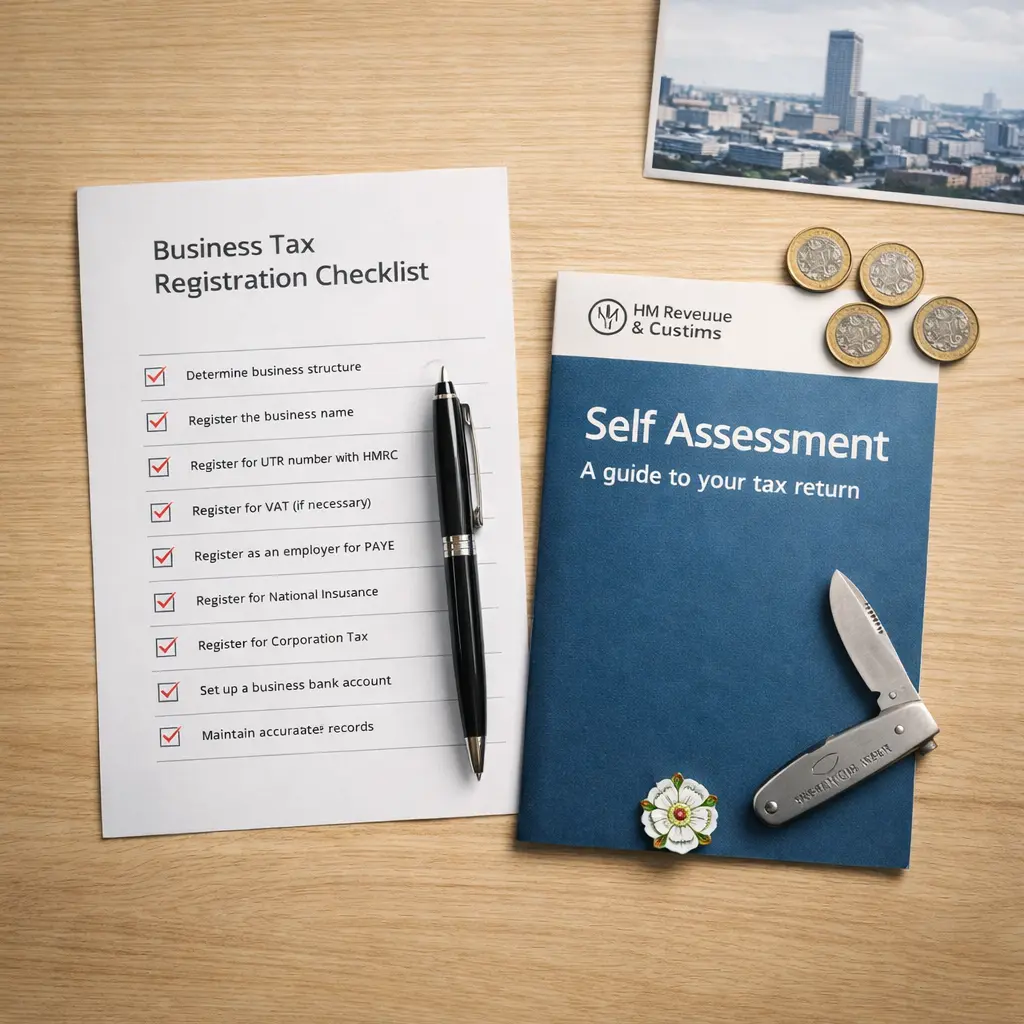
Sheffield has a thriving business community, and starting a business here is an exciting step. But alongside the planning and preparation, there are important tax and registration obligations that need to be addressed early. Getting your HMRC tax registration right from the outset protects you from penalties, keeps your records clean, and gives your business a solid financial foundation. Royston Parkin’s team in Sheffield regularly supports new business owners through every stage of this process. This checklist walks you through the key steps, from choosing the right structure to understanding your first year tax responsibilities.
Step One: Choose the Right Business Structure
Before registering with HMRC, you need to decide how your business will be structured. This decision affects your tax obligations, legal responsibilities, and the way you manage your finances, so it is worth understanding your options clearly before committing.
The most common structures for new UK businesses are:
- Sole trader: The simplest structure, where you and the business are legally the same entity. You register for Self Assessment and pay Income Tax on your profits.
- Limited company: A legally separate business entity from its owner. The company pays Corporation Tax on its profits, and you pay tax on any salary or dividends you draw.
- Partnership: Two or more people sharing responsibility for a business, where each partner registers individually for Self Assessment.
- Limited Liability Partnership (LLP): Combines elements of a partnership and a limited company, offering some personal liability protection.
If you are unsure which structure suits your circumstances, speaking with Royston Parkin before you register can save you from a decision that is difficult and costly to reverse.

Step Two: Register with HMRC and Companies House
Once your structure is decided, the next step is formal registration. The process differs depending on how your business is set up.
Registering as a Sole Trader
Sole traders are required to register for Self Assessment with HMRC. You will receive a Unique Taxpayer Reference, known as a UTR number, which identifies your personal tax record. Registration should be completed as soon as you begin trading to avoid late registration penalties.
Registering a Limited Company
Limited companies must be incorporated through Companies House before trading begins. Once registered, the company must also register for Corporation Tax with HMRC within three months of starting to trade. As a director drawing a salary or dividends, you will also need to register personally for Self Assessment.
Registering a Partnership or LLP
Each partner in a standard partnership registers individually for Self Assessment. The nominated partner also registers the partnership itself with HMRC and takes responsibility for submitting the annual partnership tax return. An LLP registers with both Companies House and HMRC.
Step Three: Understand Which Taxes Apply to Your Business
With registration in place, you need to be clear on which taxes apply from the outset.
Corporation Tax
Limited companies must register for corporation tax and file a return each year. Your accounting reference date determines your company’s year-end, and both the return and any tax due must be submitted and paid within the relevant deadlines that follow. Setting this date thoughtfully at the start makes financial planning more straightforward going forward.
VAT Registration
VAT registration becomes compulsory once your taxable turnover reaches the current VAT threshold. Some businesses choose to register voluntarily before reaching that point, which can be advantageous depending on their customer base and cost structure. Once registered, you must charge VAT on eligible sales and submit returns on a regular basis, typically quarterly.
PAYE Registration
If you intend to employ staff, or if you, as a director, will draw a salary above the Lower Earnings Limit, you must register as an employer with HMRC and operate PAYE. This covers Income Tax deductions, National Insurance contributions, and payroll reporting. Payroll compliance carries its own deadlines, and errors attract penalties, so setting this up correctly from the beginning is important.
Step Four: Know Your Key Filing Deadlines
Losing track of HMRC filing deadlines is one of the most common difficulties for new business owners. Missing a deadline rarely goes unnoticed, and the resulting penalties are entirely avoidable with a little planning.
Key dates to build into your business calendar include:
- Self Assessment tax return filing and payment deadlines for sole traders and partners.
- The Corporation Tax return filing deadline, which falls after your company’s year-end.
- VAT return submission and payment deadlines are typically quarterly once registered.
- PAYE real-time reporting obligations, which apply every time payroll is run.
- Confirmation statement filing deadline, submitted annually to Companies House.
- Statutory accounts submission deadline, filed with both Companies House and HMRC.
Mapping these dates at the start of each financial year removes a significant and avoidable source of stress.
Step Five: Set Up Your Bookkeeping and Financial Records
Sound bookkeeping is the backbone of tax compliance. HMRC expects businesses to maintain clear and accurate financial records, and poor record-keeping is one of the most common reasons businesses face difficulties during enquiries.
From day one, you should maintain records of:
- All income received
- All business expenses incurred
- VAT records, if registered
- Payroll records, if you employ staff
- Bank statements that reconcile with your accounts
Using accounting software from the outset makes record keeping far more manageable as your business grows and financial activity becomes more complex. Setting up clear systems early helps ensure your financial records remain accurate, organised, and ready for reporting when required.
Conclusion
Getting your tax registration right from the outset sets the tone for everything that follows. From choosing your structure and registering with HMRC to understanding your filing deadlines and maintaining clean financial records, each step in this checklist supports long term compliance and financial stability. Once your business is up and running, understanding your financial review options becomes the next important step toward stronger decision-making. Royston Parkin works with new and growing businesses in Sheffield to ensure these foundations are properly in place. If you are ready to start, get in touch with our team today.